


When was the last time you thanked your eyes? Probably never. Yet, from the moment you wake up until you close them at night, your eyes work tirelessly. They help you read messages, drive to work, recognize loved ones, enjoy beautiful scenery, and navigate your daily life. The amazing thing is that your eyes rarely complain — until something is wrong.
Unfortunately, many of our daily habits place unnecessary stress on our eyes. While these habits may seem harmless, repeating them day after day can contribute to eye discomfort, reduced visual performance, and in some cases, increase the risk of eye diseases. The good news is that most of these habits are easy to change.
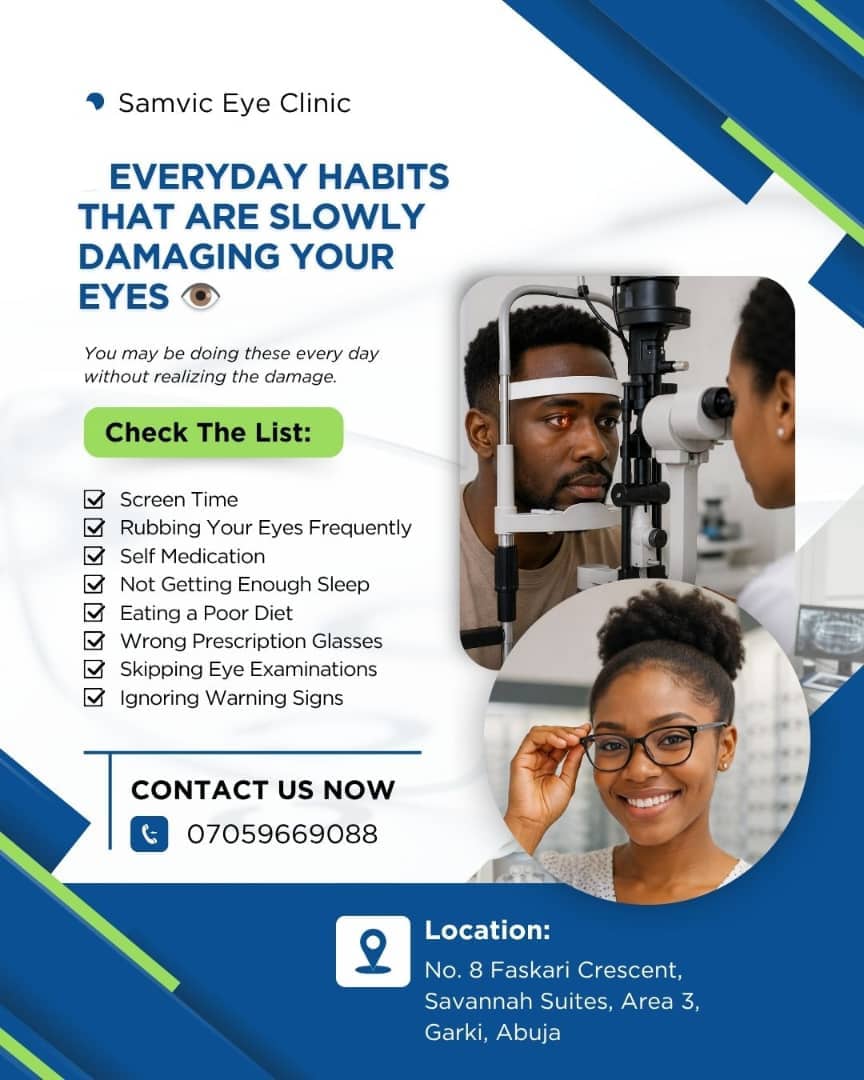
Let’s take a look at nine everyday habits that may be damaging your eyes without you even realizing it.
- Spending Hours on Your Phone without Taking Breaks
Let’s be honest. How many times have you picked up your phone “for just five minutes” only to realize an hour has passed? Whether you’re scrolling through social media, watching videos, replying to emails, or playing games, prolonged screen time can strain your eyes. When using digital devices, we blink less often. This causes tears to evaporate more quickly, leaving the eyes dry and tired. Common symptoms include dry eyes, burning sensation, blurred vision, headaches, and eye fatigue.
What you should do:
Follow the 20-20-20 Rule. Every 20 minutes, look at something about 20 feet (6 meters) away for at least 20 seconds. This simple habit gives your focusing muscles a chance to relax.
- Rubbing Your Eyes Frequently
Almost everyone rubs their eyes occasionally. But vigorous or frequent rubbing is something your eyes would rather you avoid. Rubbing may transfer dirt, germs, and bacteria from your hands into your eyes. It can also worsen allergies, increase redness, and in some people, contribute to conditions such as keratoconus, where the clear front surface of the eye becomes thinner and changes shape.
What you should do:
If your eyes itch, identify the cause. It could be allergies, dryness, or irritation. Washing your hands, using lubricating eye drops recommended by an eye care professional, or seeking treatment is a better option than constant rubbing.
- Sleeping with Your Contact Lenses On
Contact lenses are designed to improve vision, not to be worn while sleeping unless specifically prescribed for overnight use. Sleeping in contact lenses reduces the amount of oxygen reaching the cornea. This increases the risk of eye infections, corneal ulcers, pain, redness, or blurred vision.
What you should do:
Always remove your contact lenses before going to bed unless your eye care professional has advised otherwise.
- Not wearing photochromic blue cut lenses
Many people think of glasses as only a fashion accessory. In reality, glasses with blue cut lenses protect your eyes from harmful ultraviolet (UV) rays. Long-term exposure to UV radiation may increase the risk of cataracts, growths on the surface of the eyes, damage to the retina and certain cancers affecting the eyelids.
What you should do:
Whenever you’re outdoors in bright sunlight, or working with your phone or computer, choose blue cut lenses that provide 100% UVA and UVB protection. At SAMVIC EYE CLINIC, you can get lenses perfectly suited for your needs.
- Using Eye Drops Without Professional Advice
Red eyes do not always have the same cause. Some eye drops are meant for allergies, others for dryness, and others for infections. Using the wrong type can delay proper treatment or make the problem worse.
What you should do:
Avoid self-medicating, especially with antibiotic or steroid eye drops, unless they have been prescribed by a qualified eye care professional.
- Not Getting Enough Sleep
Your eyes need rest just as much as the rest of your body. Poor sleep can cause eye twitching, dry eyes, puffy eyelids, difficulty focusing, and blurred vision.
What you should do:
Aim for seven to nine hours of quality sleep every night. Your eyes will thank you.
- Eating a Poor Diet
Your eyes rely on essential nutrients to function well. A diet high in processed foods and low in fruits and vegetables may deprive your eyes of vitamins and antioxidants they need. Foods that support eye health include carrots, spinach, ugu (pumpkin leaves), fish, eggs, oranges, pawpaw, avocados, and tomatoes.
What you should do:
Eat balanced diet. A balanced diet benefits not just your eyes but your overall health.
- Wearing the Wrong Prescription Glasses
Many people continue wearing glasses long after their prescription has changed. Others buy glasses from roadside vendors without having a proper eye examination. The result can include headaches, eye strain, blurry vision, and difficulty concentrating.
What you should do:
Schedule a comprehensive eye examination every one or two years to determine if your prescription has changed and get the correct prescription for your eyes.
- Skipping Routine Eye Examinations
One of the biggest mistakes people make is waiting until they notice a problem before visiting an eye clinic. This is dangerous because many serious eye conditions like glaucoma and diabetic eye disease, often develop without obvious symptoms in their early stages. Routine eye examinations can detect these problems before they begin affecting your vision.
What you should do:
Even if your eyesight seems fine, get regular check-ups as these are an important part of protecting your eye health.
- Ignoring Warning Signs
Your eyes have a way of telling you when something isn’t right. Unfortunately, many people ignore symptoms until they become severe. Never ignore sudden blurred vision, persistent redness, eye pain, flashes of light, new floaters, double vision, loss of part of your vision, and eye injuries.
What you should do:
Seeking prompt professional care can make the difference between preserving and losing vision.
Small Habits, Big Impact
Protecting your eyesight doesn’t always require major lifestyle changes. Simple habits like taking screen breaks, wearing sunglasses, eating nutritious foods, getting enough sleep, and scheduling routine eye examinations can make a significant difference over time. Remember, your eyes don’t get a day off. They work for you every single day, often without recognition. Giving them the care they deserve today can help preserve your vision for years to come. At SAMVIC EYE CLINIC, we believe that prevention is always better than treatment. Whether you’re experiencing eye discomfort, blurry vision, headaches, or simply want to stay ahead of potential eye problems, our experienced team is here to help. A comprehensive eye examination can detect many eye conditions long before they begin affecting your sight. Don’t wait until your eyes are crying out for help. Book your eye examination today and take a proactive step toward lifelong healthy vision.
Your Health, Our Priority.
