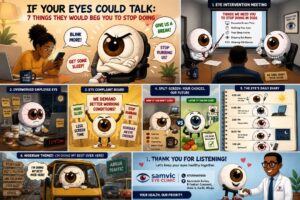


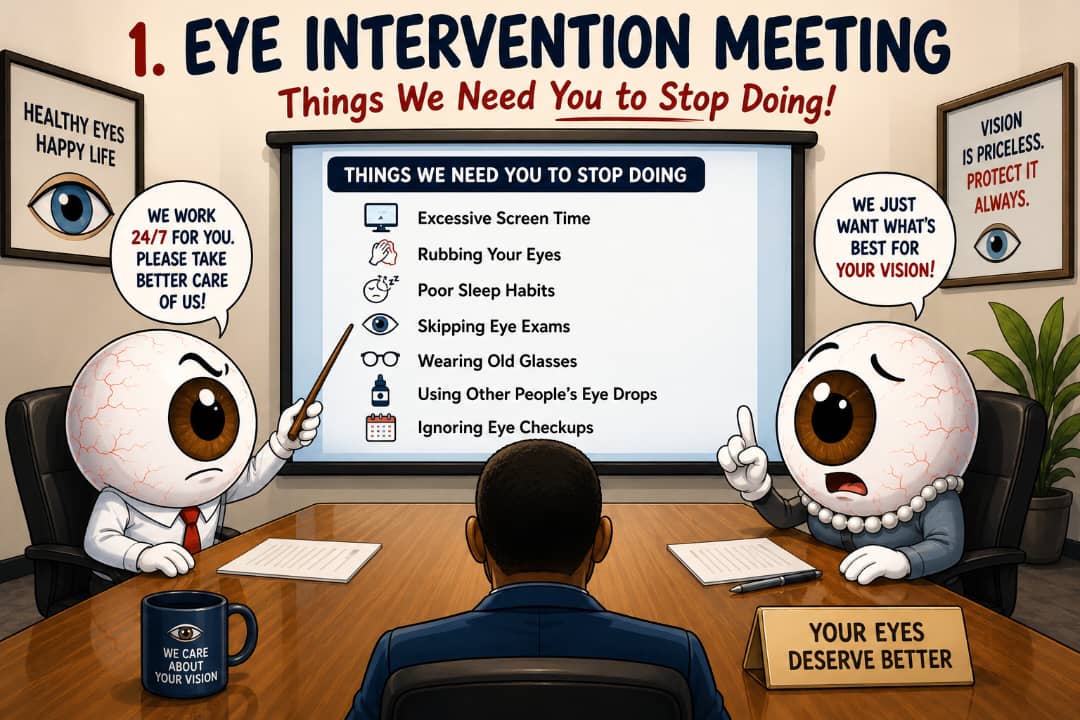
Imagine for a moment that your eyes could speak. After working tirelessly from the moment you wake up until you fall asleep, they finally decide they’ve had enough. They gather the courage to sit you down for a serious conversation.
”We love helping you binge-watch your favorite series, scroll through social media, drive through Abuja traffic, and admire beautiful sunsets. But honestly? You’re making our job much harder than it needs to be.”
The truth is that our eyes are among the hardest-working organs in the body. Yet many of us take them for granted until something goes wrong. From staring at screens for hours to ignoring routine eye examinations, our daily habits often put unnecessary strain on our vision. If your eyes could talk today, here are seven things they would beg you to stop doing.
1. “Please Stop Staring at Your Phone for Hours Without a Break”
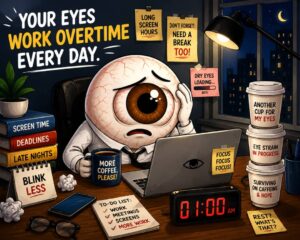
Let’s start with the biggest offender. Whether you’re replying messages, scrolling through social media, watching videos, or working on a laptop, your eyes are spending more time looking at screens than ever before. When you focus on a screen for long periods, you blink less frequently. This causes your eyes to dry out and become irritated.
Common symptoms of digital eye strain include:
- Dry eyes
- Headaches
- Blurred vision
- Burning sensations
- Neck and shoulder pain
- Eye fatigue
Your eyes would probably say:
”Can you please look away every once in a while? We need a break too!”
A simple solution is the 20-20-20 rule: Every 20 minutes, look at something 20 feet away for at least 20 seconds. It’s a small habit that can make a big difference.
2. “Stop Rubbing Us Like You’re Trying to Start a Fire”
We’ve all done it. You wake up feeling sleepy or get something irritating in your eye, and your first instinct is to rub vigorously. Unfortunately, excessive eye rubbing can do more harm than good.
Constant rubbing may:
- Cause irritation
- Increase redness
- Transfer germs into the eyes
- Worsen allergies
- Damage the delicate surface of the eye
In severe cases, frequent eye rubbing has been linked to a condition called keratoconus, where the cornea gradually becomes thinner and changes shape, affecting vision. If your eyes itch, try using prescribed lubricating drops or seek professional advice instead of rubbing them repeatedly.
3. “Please Stop Ignoring That Redness”
Many people assume that red eyes will simply disappear on their own. Sometimes they do. Sometimes they don’t. Redness can be caused by:
- Allergies
- Dry eyes
- Infections
- Eye injuries
- High eye pressure
- More serious underlying conditions
The problem is that without proper examination, it is impossible to know the exact cause. Your eyes would probably ask:
”Why do you rush to the hospital when your stomach hurts, but ignore us when we’re clearly trying to tell you something?”
Persistent redness should never be ignored.
4. “Stop Borrowing Other People’s Eye Drops”
This might sound surprising, but eye drops are not one-size-fits-all. Using someone else’s eye medication can worsen your symptoms or even mask a serious problem.
For example:
- Eye drops used for allergies may not help infections.
- Some drops can increase irritation.
- Sharing eye drops can spread bacteria.
What worked for your friend may not work for you. Your eyes would rather you seek professional guidance than play doctor.
5. “Please Get Some Sleep”
Your eyes are not designed to work around the clock. Just like the rest of your body, they need time to recover. Poor sleep can lead to:
- Eye twitching
- Dry eyes
- Blurred vision
- Difficulty focusing
- Eye fatigue
If you’ve ever looked in the mirror after a sleepless night and noticed puffy, red, tired-looking eyes, you’ve already seen the effects. Adults should aim for seven to nine hours of quality sleep each night. Think of sleep as a nightly recharge for your vision.
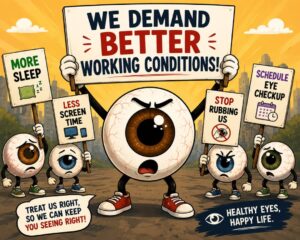
6. “Stop Wearing Old Prescription Glasses”
Many people continue using glasses long after their prescription has changed. Some even wear glasses that are scratched, damaged, or poorly fitted. The result?
- Frequent headaches
- Eye strain
- Blurred vision
- Difficulty concentrating
Your eyes constantly work harder to compensate when your vision correction is no longer accurate. Regular eye examinations ensure that your prescription matches your current visual needs.
7. “Please Stop Skipping Your Eye Checkups”
This is perhaps the most important request of all. Many eye diseases develop silently. Conditions such as glaucoma, diabetic eye disease, and some forms of retinal damage may show little or no symptoms in their early stages. By the time noticeable vision loss occurs, permanent damage may already have happened. Routine eye examinations allow problems to be detected early, often before they begin affecting your sight.
Your eyes would probably say:
”We’ve been serving you faithfully every day. The least you can do is have us checked regularly.”
The Bottom Line
Your eyes are incredible. They help you read, work, learn, drive, recognize loved ones, and experience the beauty of the world around you. Yet they often receive less attention than almost any other part of the body. If your eyes could speak today, they wouldn’t ask for much. They would simply ask you to take better care of them by reducing screen strain, avoiding excessive rubbing, getting enough sleep, wearing the correct prescription, and scheduling regular eye examinations. After all, you only get one pair.
Give Your Eyes the Care They Deserve. At Samvic Eye Clinic, we believe healthy vision is essential for a productive and fulfilling life. Whether you’re experiencing eye discomfort, blurry vision, headaches, redness, or simply haven’t had an eye examination in a while, our experienced team is ready to help.
Don’t wait until your eyes start shouting for attention. Book a comprehensive eye examination today and take the first step toward protecting your sight for years to come. Samvic Eye Clinic – Your Health, Our Priority